
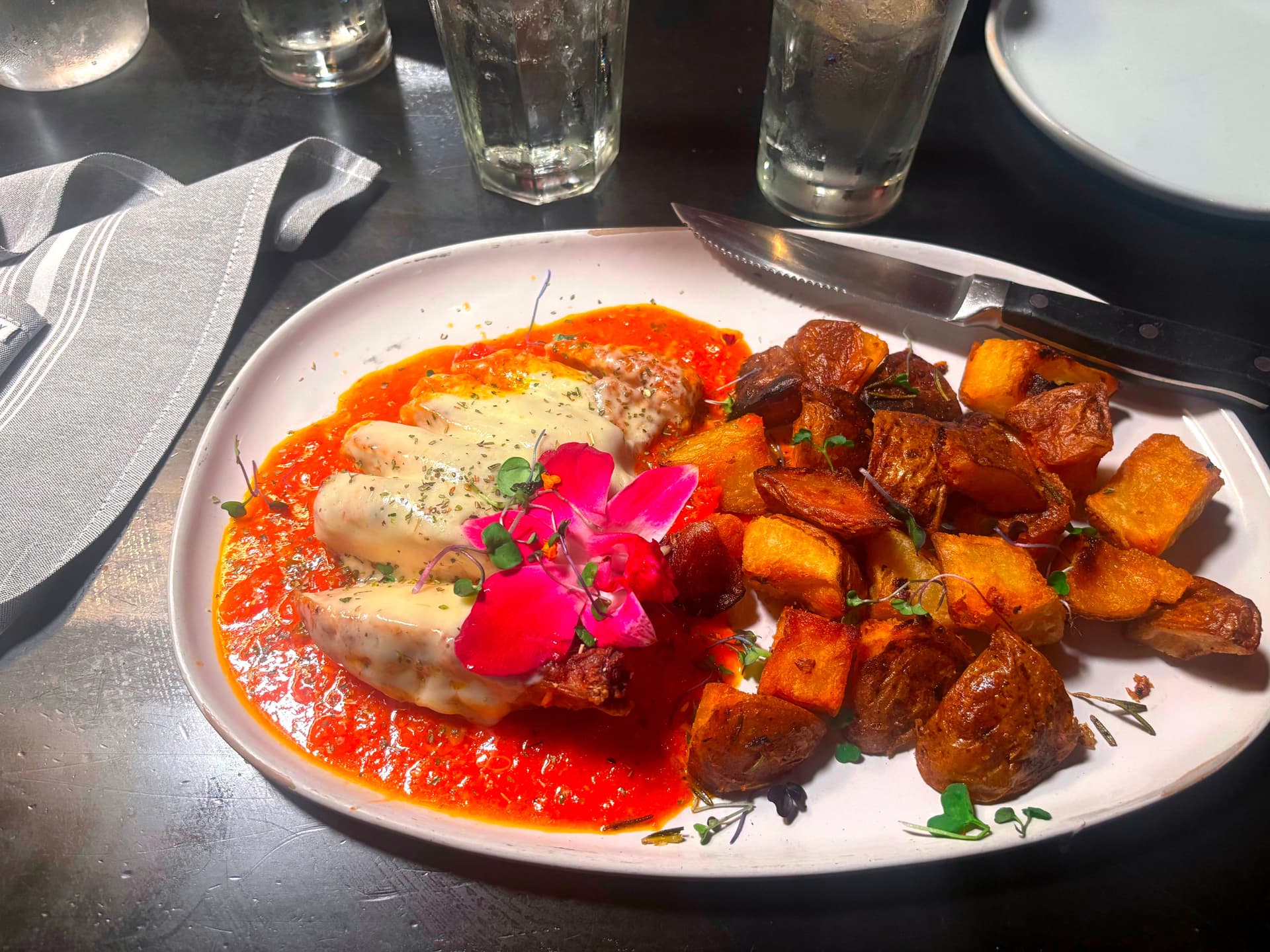
Who Decided What You Should Eat?
On inherited norms, borrowed truths, and the courage to experiment with your own life.
the video that started the thought
I was watching Chef Abby — a Ghanaian food creator — make a meal from corn dough that I had never seen before in my life.
And I grew up in Ghana. I ate Ghanaian food my whole childhood. But here was this dish, clearly Ghanaian, clearly ancient, and completely invisible to me.
So I started asking: how did jollof rice and waakye become the staples while this got left behind? Who made that call? Was it the people in power at the time? Economics?
And then the bigger question hit me: does mainstream even mean better?
fufu wasn’t always fufu

Think about it. At some point, we were hunter-gatherers. Nobody was pounding cassava into dough.
Someone decided — at some specific moment in history — that we were farmers now, and that this is what we do with the harvest. They made a choice. And enough people followed it that it became culture. And then it became tradition. And then it became the way things are.
I grew up eating fufu and groundnut soup almost every week. And I never once questioned it. That was just food. That was just home.
But who decided? And why did their decision get to travel all the way to my childhood table without my consent?
it’s not just food
This is the thing about growing up inside any system. You don’t see the walls while you’re inside them.
We’re born into social contracts, nation states, family rules, religious frameworks, food cultures — all of it already decided. Jiang Xueqin’s framework describes how institutions and civilizations run on inherited patterns that people rarely stop to examine. We’re handed a version of history, a version of normal, and we absorb it as just reality.
And some of those inherited things are genuinely good. But some of them were just the loudest idea at the time. Some of them were shaped by whoever had the most power. And some of them were rejected alternatives that might have actually worked better for you specifically.
The rejected alternatives don’t disappear. They just get buried. Like that corn dough dish Chef Abby was making.
the mainstream healthcare default
The same thing happens in healthcare.
When something goes wrong with my body, the default is a general practitioner — the institution, the mainstream. And genuinely useful too — I’m not dismissing it.
But there are other frameworks. Naturopathic medicine. Root cause approaches. Chinese medicine. Each of them developed by people, tested by people, rejected or accepted by whoever had cultural and economic power at the time.
And some of them might actually be what my body needs — addressing what the mainstream framework misses for me specifically.
Treating the mainstream option as the only real one, and everything else as fringe — that’s where inherited trust replaces discernment.
two things I discovered on my own body
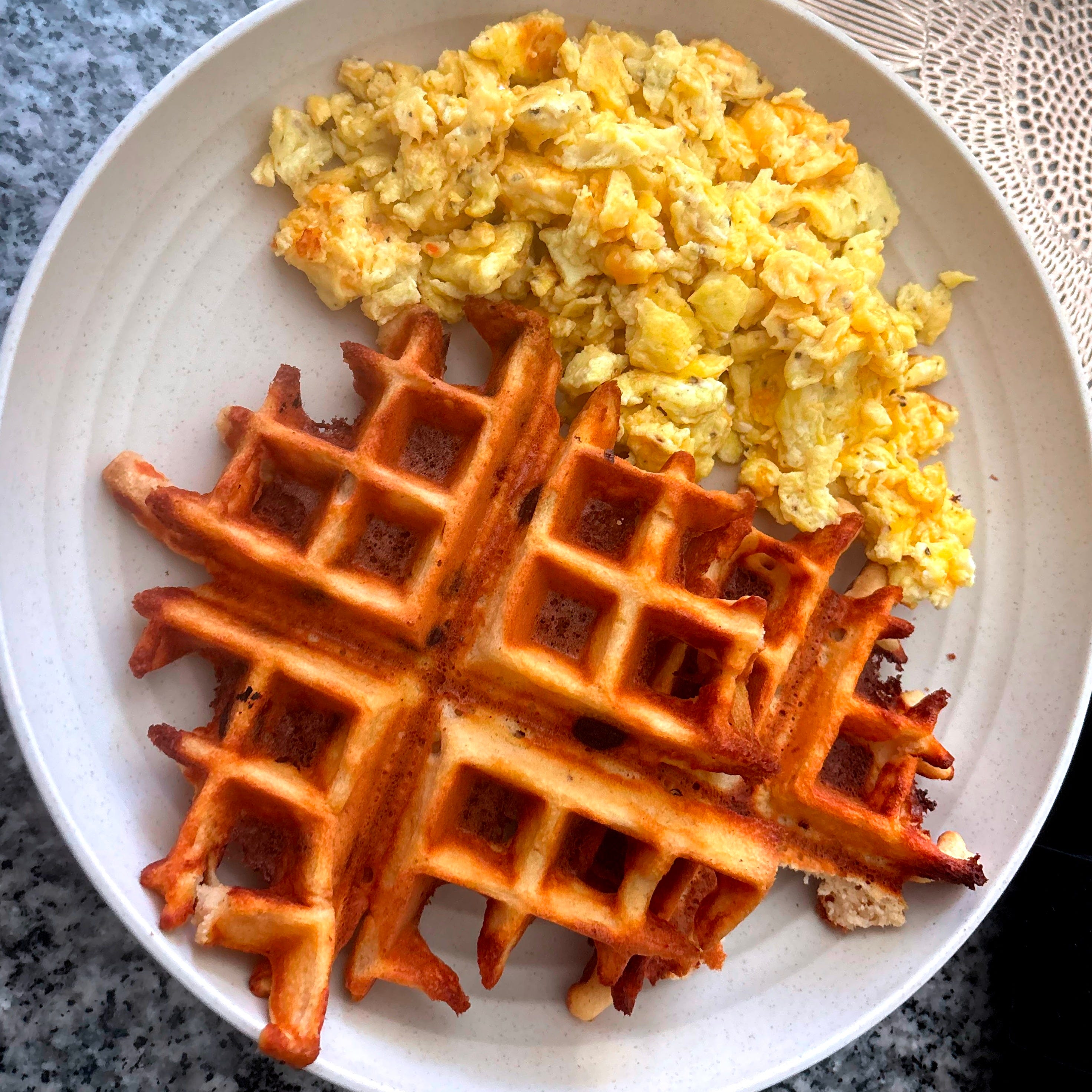
I’ve been having menstrual cramps lately. And instead of reaching for painkillers immediately, I tried something: I breathed deeply into my lower belly, expanding my abdomen fully on the inhale, then exhaled slowly through my mouth while letting my whole body go completely soft — like it was collapsing into itself. And the pain reduced. Instantly. One breath in, one breath out, and I felt it shift in that exact moment.
There was no protocol. No doctor told me to do this. It was just me, paying attention to what my body responded to.
Then I had a bout of nausea and tried a Sea-Band — an acupressure wristband that applies pressure to the P6 (Nei-Kuan) point on the wrist. Research shows this point, rooted in Traditional Chinese Medicine, has been clinically tested for nausea relief across multiple conditions. The idea that a small button pressing on a specific point on my wrist could calm my stomach — with no drugs, no side effects — was genuinely fascinating to me.
Both of these things exist in the rejected pile of mainstream Western medicine. But they worked for me, in my body, in that moment.
what glucose has to do with cancer
Here’s where it gets really interesting.
Emerging research is pointing to a connection between metabolic health and cancer cell behavior. Studies published in peer-reviewed journals show that cancer cells are heavily dependent on glucose — consuming it at much higher rates than normal cells, a phenomenon called the Warburg effect. Reducing glucose availability through fasting or metabolic switching essentially cuts off a primary fuel source cancer cells rely on.
Research on ketogenic diets and fasting-mimicking diets suggests inducing ketosis — where the body runs on ketones rather than glucose — may slow tumor growth because healthy cells can adapt to use ketones, while many cancer cells struggle to make that switch. A Nature Metabolism paper also explores how metabolic switching through intermittent fasting affects cellular health at the mitochondrial level.
Fasting is not a standard cancer cure yet, and the research is still developing. But something as simple as what you eat — and when — has a measurable effect on your cellular environment. And the connection between food, metabolism, and disease is something the mainstream model rarely leads with.
Who decided that glucose-heavy eating was the default? And who decided it was fine?
reality contact
, who writes the Substack Deconstructionology, talks about something he calls “reality contact” — the capacity to engage your actual life and experience directly, without outsourcing your conclusions to inherited structures. His whole body of work is about building what he calls existential health: the ability to “build a life that holds without relying on borrowed certainty.”
Borrowed certainty is eating fufu because that’s what Ghanaians eat. Reality contact is eating fufu because you paid attention to how your body actually feels after eating it, and you chose it consciously. Or you just enjoy it and it works for you.
Same food. Completely different relationship to it.
my own experiment
I’m still figuring out what works for my body. I don’t have all the answers yet.
But what I do know is this: I don’t have to eat a certain way just because everyone around me does. Even if it’s not mainstream. Even if my parents didn’t eat that way. Even if it raises eyebrows at the dinner table.
That realization alone felt like something. Because fufu is carbs. Jollof is carbs. Waakye is carbs. These foods are home. And questioning them — even gently — felt almost like questioning my identity at first.
But there’s a difference between honoring something and being bound by it. And I get to decide which one I’m doing.
the internal approval
Here’s what shifts when you start relating to your life this way.
You stop needing external permission to trust your own experience. Because you have your own data. You did the experiment. You observed the results. And that gives you a kind of internal stability that borrowed certainty never can — borrowed certainty always needs to be renewed by the group, while your own experience just is.
And something else builds too. A stronger sense of self. A stronger self-confidence. A stronger self-esteem. You’re accepting your internal reality as real — as valid, as worth listening to — instead of constantly measuring it against what’s external or inherited. You start to know yourself through direct contact with your own life. And that knowing doesn’t shake as easily.
Jim Palmer calls it existential health. The capacity to stay in contact with your own reality and make choices from there.
And it applies to everything. What you eat, how you practice spirituality, what medical care you seek, what cultural norms you carry forward and which ones you gently set down.
a different kind of exploration
Chef Abby was making something that most Ghanaians had never seen — a dish that existed, that was real, that was ours, and that had just faded from view.
And that stayed with me. The mainstream path carries value. But it was also never the only option. There were always other foods, other frameworks, other ways of living — that just didn’t get amplified.
Exploring them is just paying attention. It’s asking: when I do this, what actually happens for me? And being willing to let the answer be different from what you were raised to expect.
the cost of needing acceptance
When you start living that way — choosing what actually works for you over what was handed down — you risk not being accepted by the very people who handed it to you. The group that taught you the rules doesn’t always celebrate you questioning them.
By needing to be accepted, we allow others to define who we are and what’s good for us — sometimes people who put these rules in place and are now dead.
And rejection hurts even more when we’re already rejecting who we truly are.
If this resonated, share it with someone who’s been questioning something they were told was just the way things are.